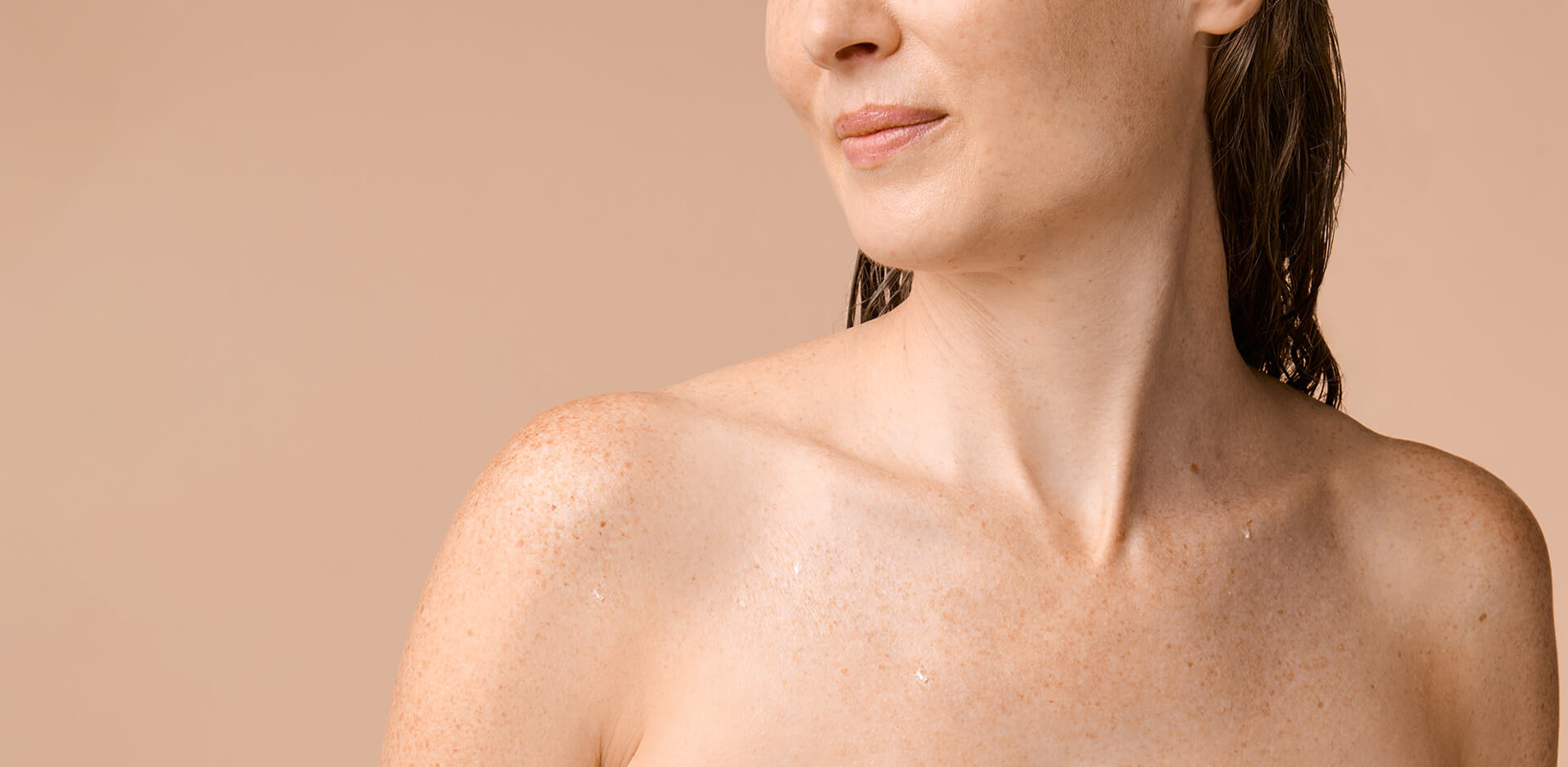
What is healthy skin
Apart from allowing you to experience the world through your sense of touch, there’s so much more to your skin. It’s your first line of defence against external aggressors and can even help with the normal functioning of your immune system. There are many types of bacteria and other organisms that live on your skin. Together, they make up your skin microbiome, which needs to be balanced for natural healthy skin. Some of the signs of natural healthy skin are (source):
- You can’t feel anything. This means that it just seems like your skin is “there” and that it doesn’t feel like anything.
- Your skin is not dry, flaking or sensitive.
- Your skin is not blotchy or red.
- Your skin has elasticity, meaning that it stretches easily.
- You don’t have any sun spots. (Remember to apply an SPF daily)
- You don’t have any acne.
To keep your skin performing at its healthy best, you’ll need a healthy skincare routine that’s specific to your skin type.
- Dry and very dry skin types will need extra moisturising skincare products that help to lock in hydration, which makes a great environment for your microbiome balance.
- Sensitive skin types will need more hypoallergenic skincare products with carefully selected ingredients that minimise the risk of irritation.
- Normal skin will need heathy skincare products that keep your microbiome and natural pH balanced so that it continues to perform at its healthy best.
How to get healthy skin: the guide
If you’re looking to improve skin health or even to keep it performing at its healthy best, here are 5 tips to keep skin healthy (source).
1. Know your skin type
Knowing your skin type is the first step to understanding its specific needs. If you have dry or very dry skin, you’ll want to use healthy skincare products that add or lock in hydration. That would include moisturising shower gels and a good moisturiser, which you can apply throughout the day.
Sensitive skin will need mild products that are hypoallergenic and designed to minimise the risk of irritation. You should look out for products that contains 0% colourants and 0% fragrance. Take a look at our range of Sanex Zero% products for some inspiration.
2. Nutrition for healthy skin
Drinking and eating for healthy skin is important. What you put into your body has an effect on your skin health. A well balanced diet, where you get all essential nutrients and vitamins can help to keep skin healthy. And don’t forget water! Make sure you drink plenty of water each day to help keep your skin hydrated.
3. Sun cream
We can’t stress this enough! It’s so important to apply sun cream each and every day. Even on cloudy days. This protects your skin from harmful UV rays from the sun, which has been linked to ageing and a number of other conditions. It’s also a good idea to stay out of direct sunlight and not to use tanning beds.
4. Get enough sleep
Getting enough sleep can help to improve skin health. When you sleep, your skin’s blood flow increases and your skin rebuilds its collagen. It also repairs damage from UV rays, while reducing wrinkles and age spots. Try to get 7 – 9 hours of a sleep each night.
5. Ditch long hot baths and showers
Even though we all love a long hot shower or bath, it’s not always good for your skin. Soaking in very hot water can remove oils from your skin and leave it feeling dry.
6. Stop smoking
Besides the well-known dangers of smoking, it can also have a negative impact on your skin. Cigarettes contain a number of harmful chemicals in them that trigger the destruction of collagen and elastin, which help your skin to stay strong and elastic. By stopping smoking, you can improve skin health.
Understanding your skin
Now that you understand more about how to get healthy skin, it’s time to put some of the tips into practice. Create a healthy skincare routine that nourishes and looks after your specific skin type from morning to night. You can also visit our online Skin Knowledge page to get even more information and tips to keep skin healthy.
*Does not contain any sulphate-based surfactants.
**Sanex updates all the fragrances regularly, avoiding, where possible, the use of fragrance allergens regulated under EU Cosmetics Regulation 1223/2009.